Timber Garden Sheds Australia
June 2026
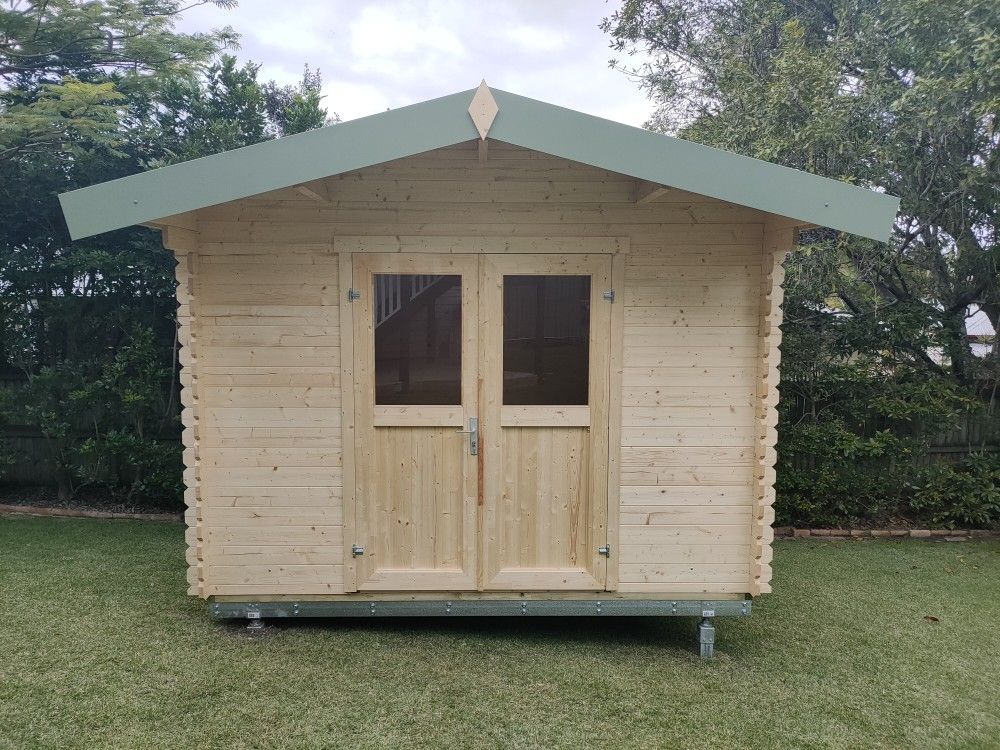
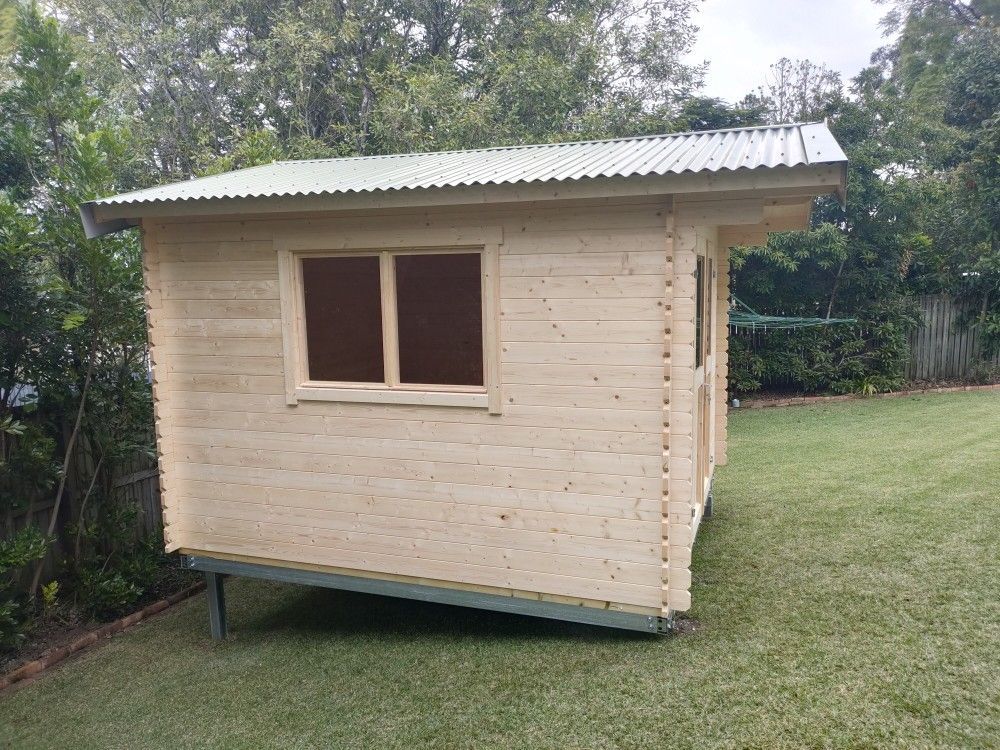
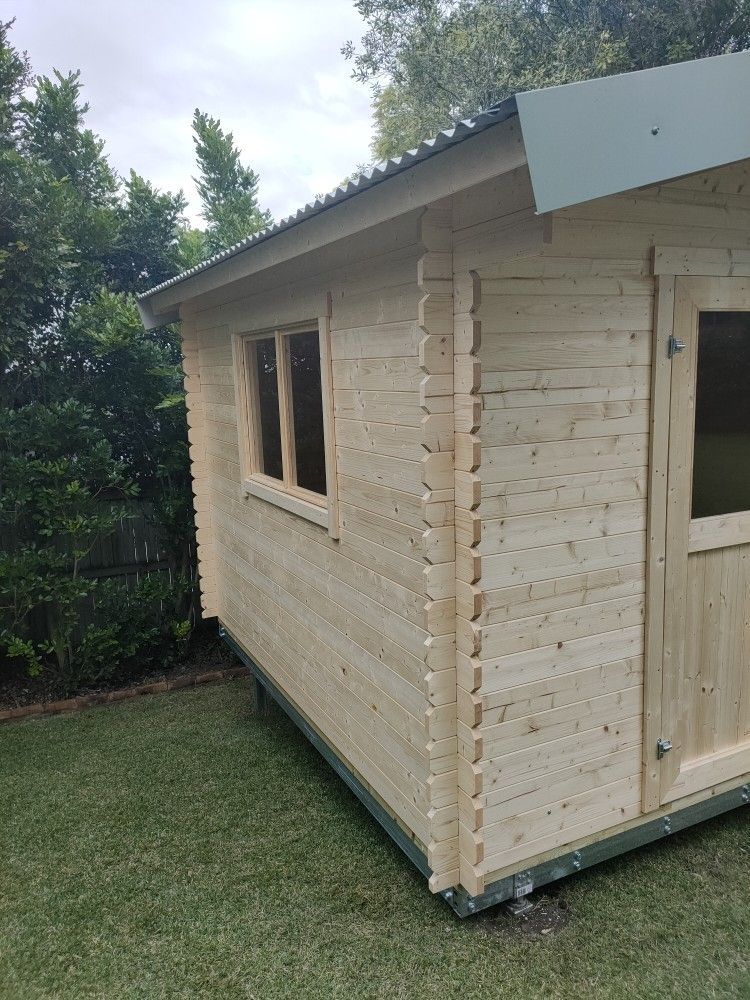
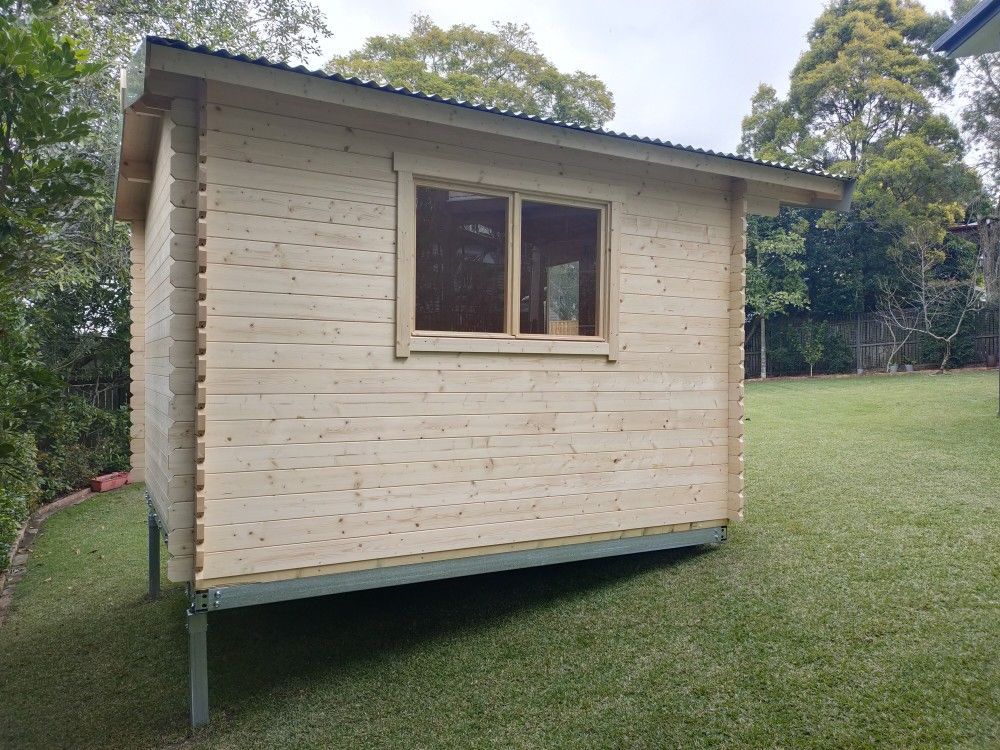
For quite some time now we have been offering a full range of solid timber garden sheds in both 50 mm (rather than 34 or 44mm) and 28mm log wall thickness (rather than 19 or even 14 (!!) mm) using very strong interlocking corner logs. The 28mm cabins, like this GRETTEL 10, are overall lighter, and come with less features than our 50mm wall log thickness cabins. But even in this lighter wall log thickness our cabins are still fully guaranteed for a period of 5 years. Below, we have endeavored to show the main difference in both wall thickness ranges. NOTE - we can not over-empathize the importance of the wall log thickness! PLEASE check the log wall thickness of any cabin you are considering buying.
Ground Preparations
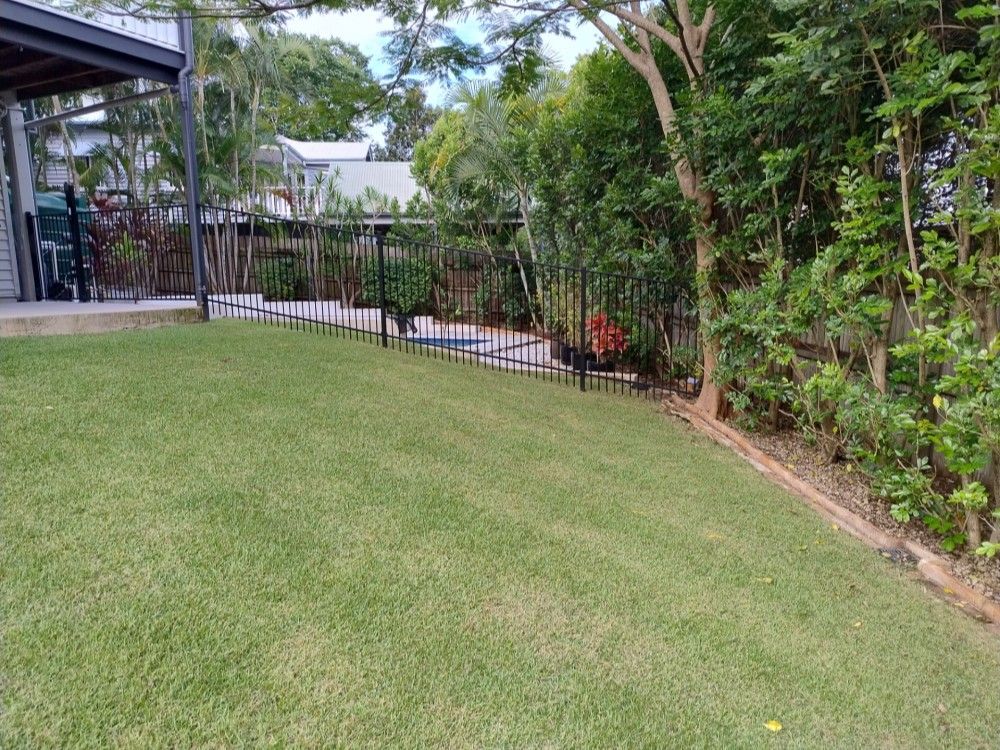
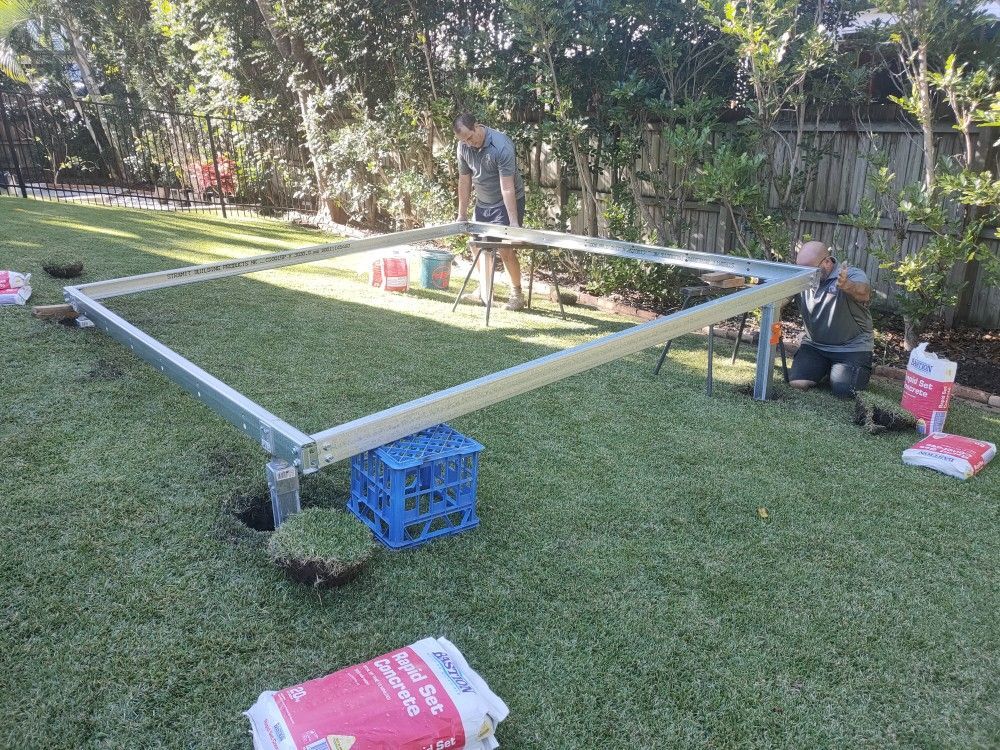
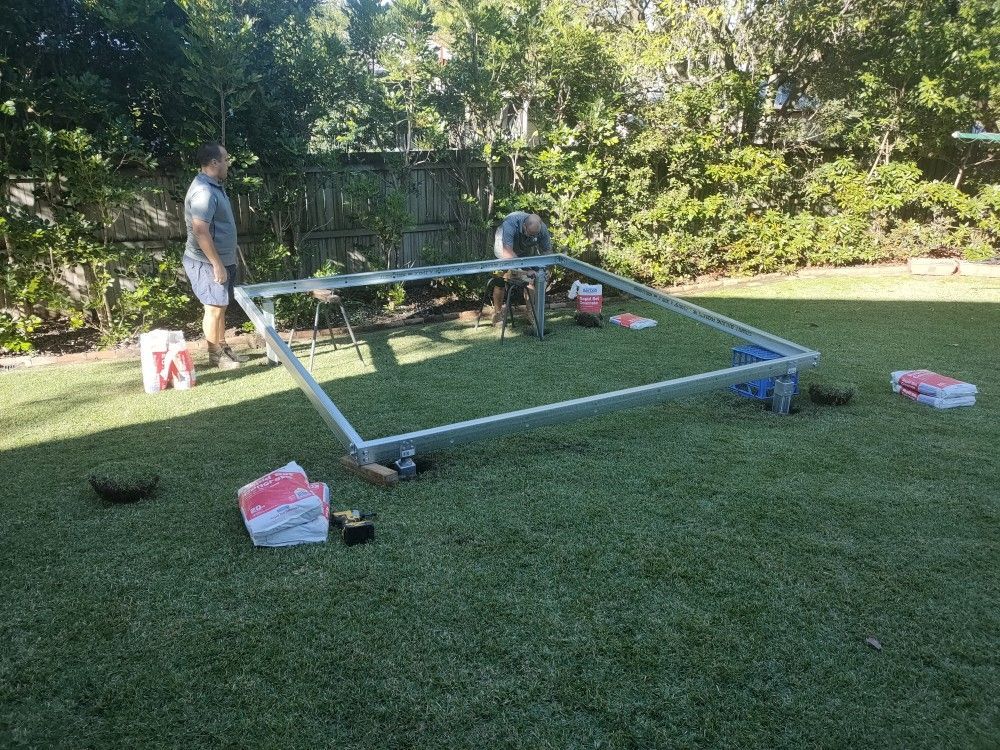
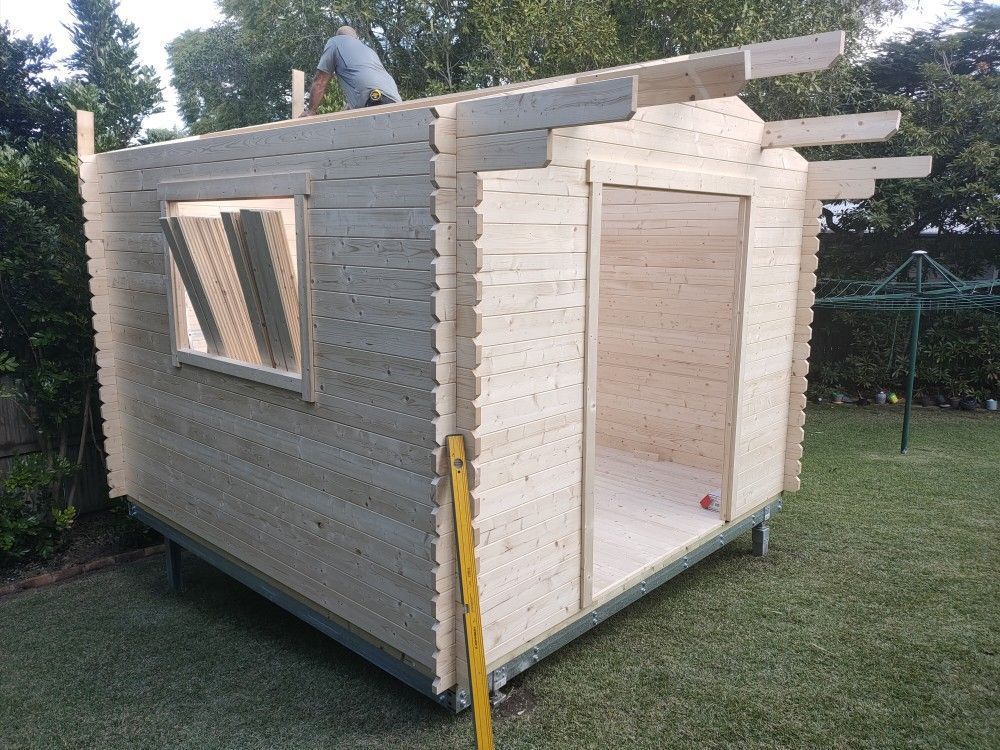
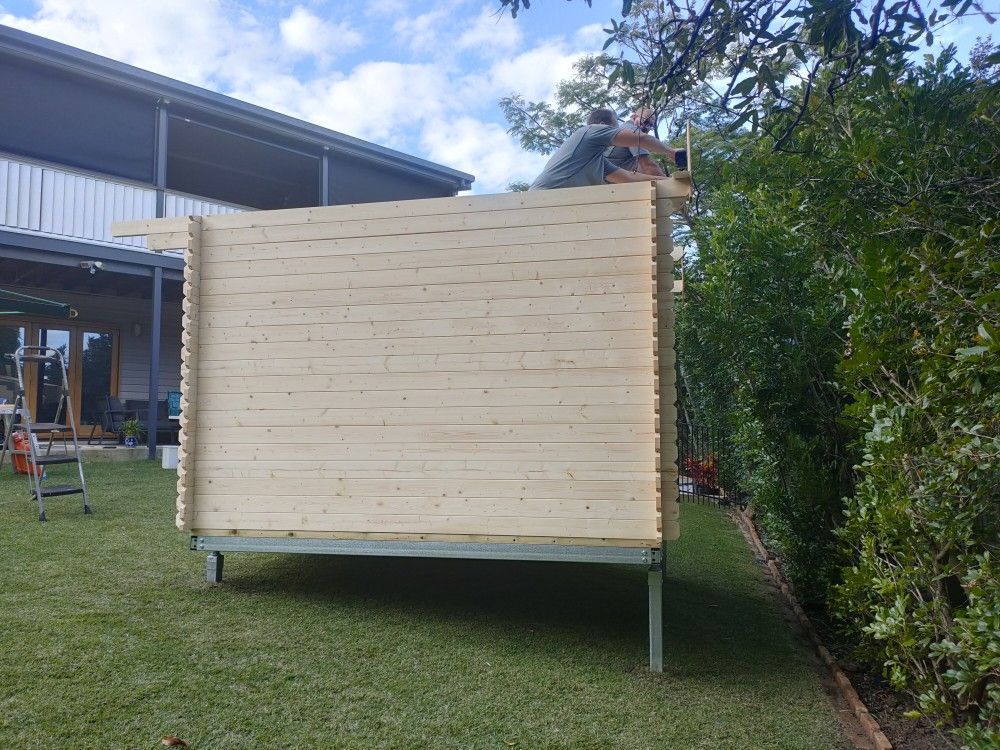
Another good example of the perfect use of a steel purlin base. Emma's backyard slopes away towards the rear fence. This means either digging and removing a lot of soil and building a retainer wall OR - simply elevating the cabin using a steel purlin base.
Being the perfectionists we are, we kept the lawn circles we needed to remove to dig the foundation post holes, and replaced these later on to cover up the top of the rapid-set concrete we use to secure the posts. This made for a very neat finish indeed.
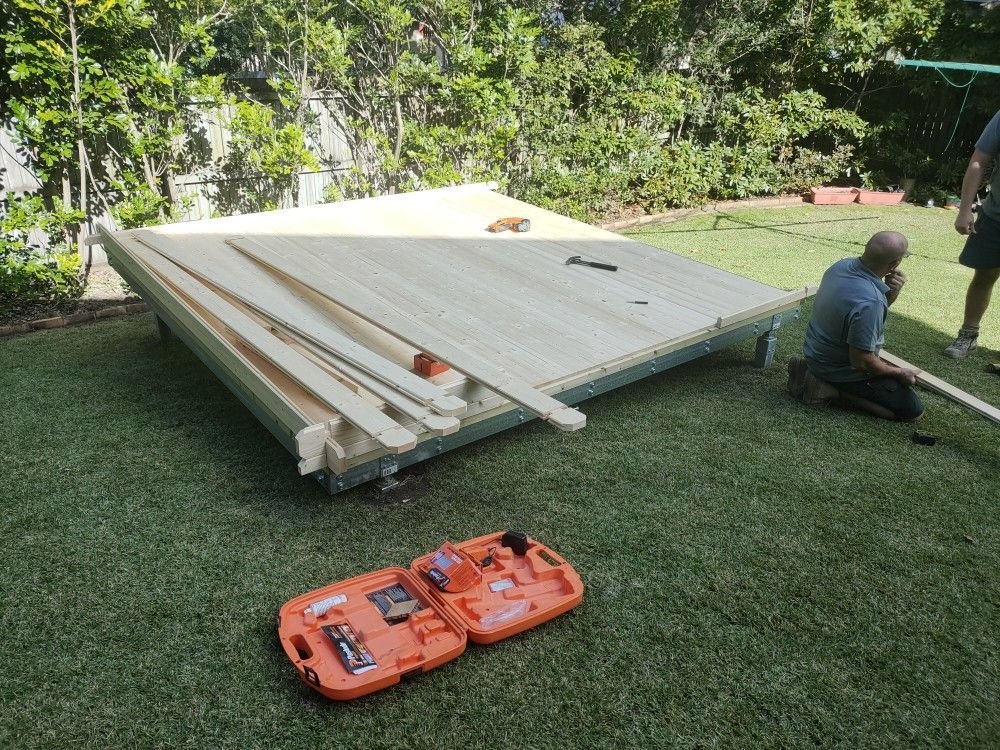
Our 28mm cabin models come with solid t&g pine floorboards. These are precut to size by our factory. We used a nail gun to create the perfect "hidden nailing" finish. The last floorboard needs to be cut to the correct width, and is affixed by temporarily removing the first wall log.
Downunder...
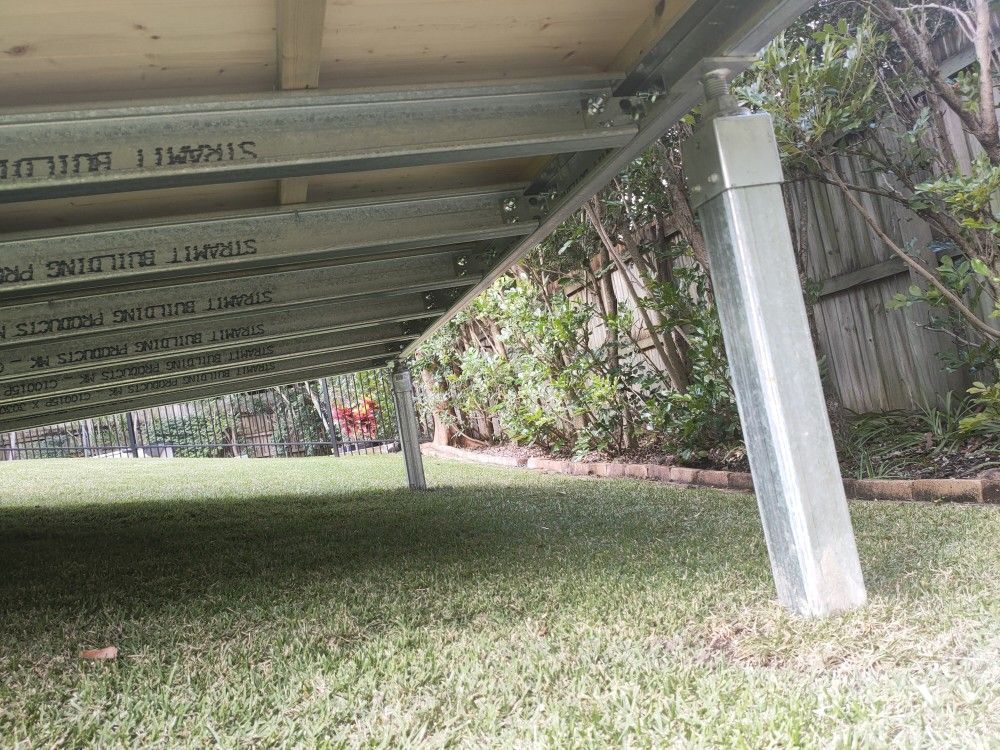
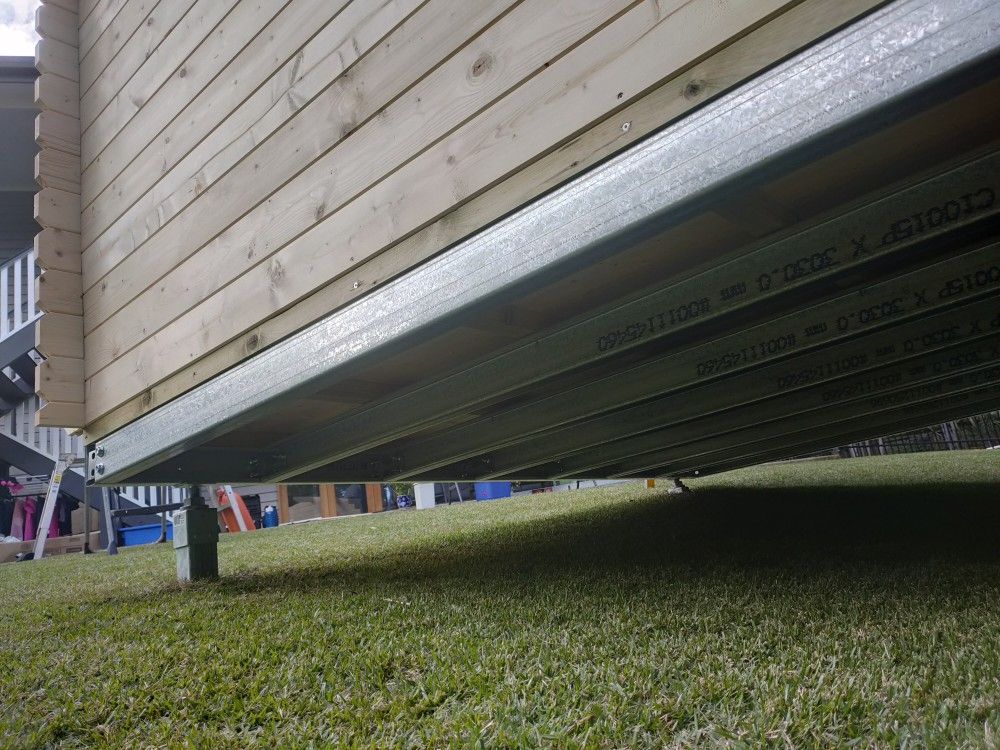
Raising your cabin off the ground has several advantages. Of course this avoids dampness from the ground to creep into your cabin (thousands of Queenslander homes can't be wrong!) and helps keeping your cabin comfortable all year round.
It also provides access from underneath to run services, especially electrical cables.
Furthermore, it enables you to visually inspect your steel posts for termite mud trails every now and then.
And while we are on the topic of termites - like any other timber used in construction your cabin needs termite protection. There are may options to achieve this, same as for your house. For your own health it is NOT advisable using treated timber to build your cabin.
Wall Log Thicknesses
Cabins made from 28mm solid wall logs are often underrated. They are still far superior to corrugated steel sheds, as they are much more solid, and provide a waterproof and airtight garden space. However, for more frequent day use we do recommend one of our 50mm models.
Using thinner timber wall "planks" such as 18 or 19mm (the thickness we use for floorboards and roof boards!) results in much weaker structures.
Walls can be easily moved by hand, and resistance to tropical cyclone winds etc is close to non-existent. As of late, hardware stores started offering "sheds" in 14mm (yeap, not a misprint) at prices that make our toe nails curl!
All done....
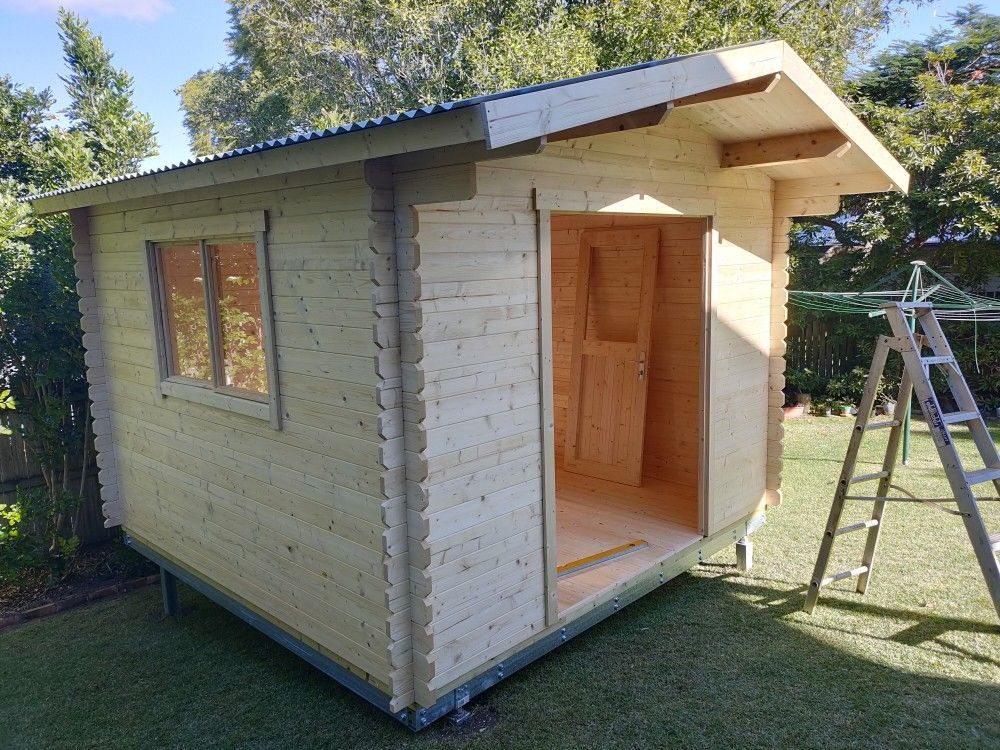
For the 28mm wall log cabin "GRETTEL 10", we use the exact same steel base and roofing then what we use for the 50mm wall thickness cabin model "SAM 10". Roofing supplied from overseas is invariable some sort of bitumen roll-out or shingle roofing, which is NOT suitable to Australian weather conditions. Bitumen gets too hot in peak summer and when fully exposed to direct sun.
Close to all our cabins come with Australian-made COLORBOND corrugated iron roofing in the colour of your choice (sheets, screws and ridge capping).
For a small additional charge, we can also supply barge capping, metal top hat battens and insulation wool "Rhino Blanket".
Window opening fittings
The closing and opening mechanisms supplied with 28mm wall log cabins differ from what is supplied with our 50mm log cabin models.
In general, these fittings are aimed at basic garden sheds instead of residential grade cabins.
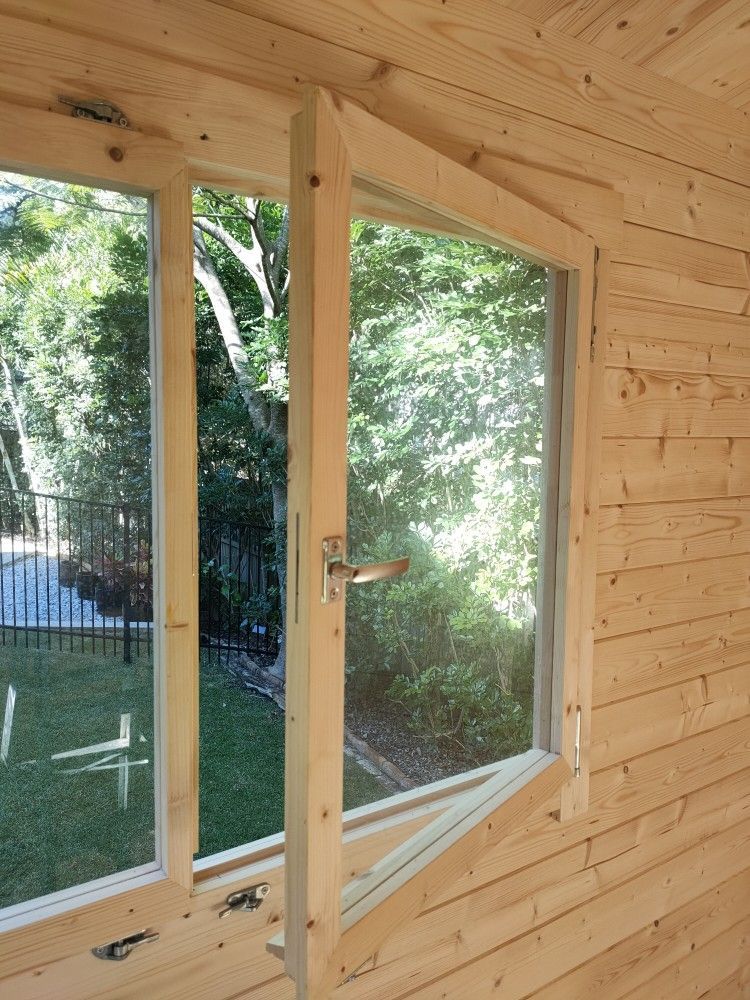
You still get the famous "Tilt'n'Turn" mechanisms, though they need three easy steps to activate, instead of being incorporated in the main window opening handle.
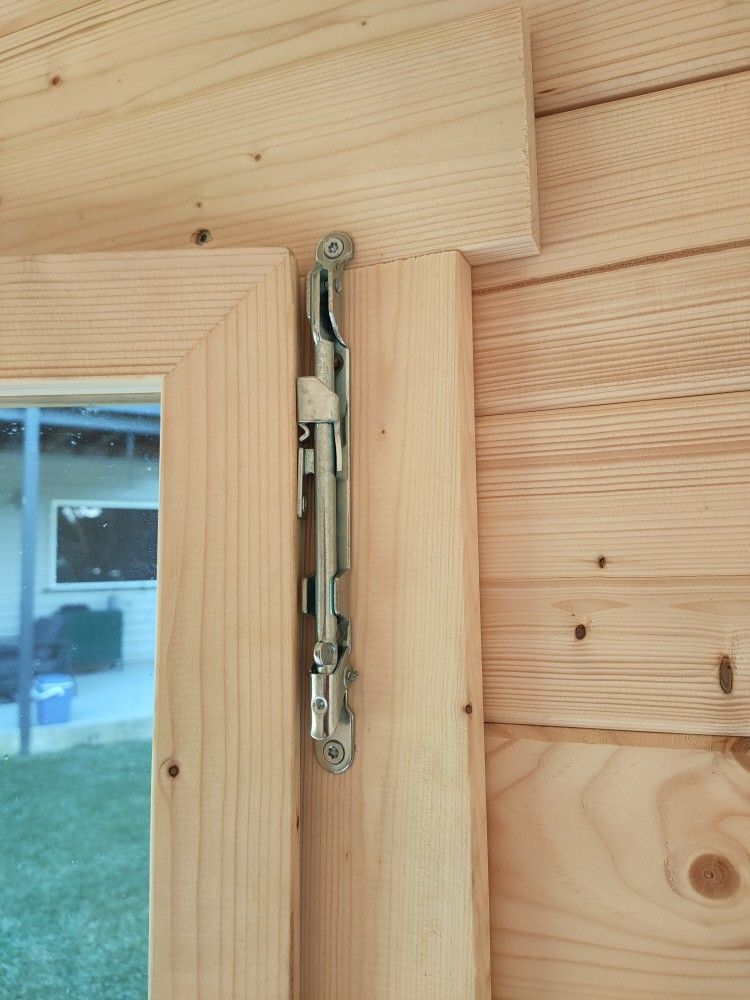
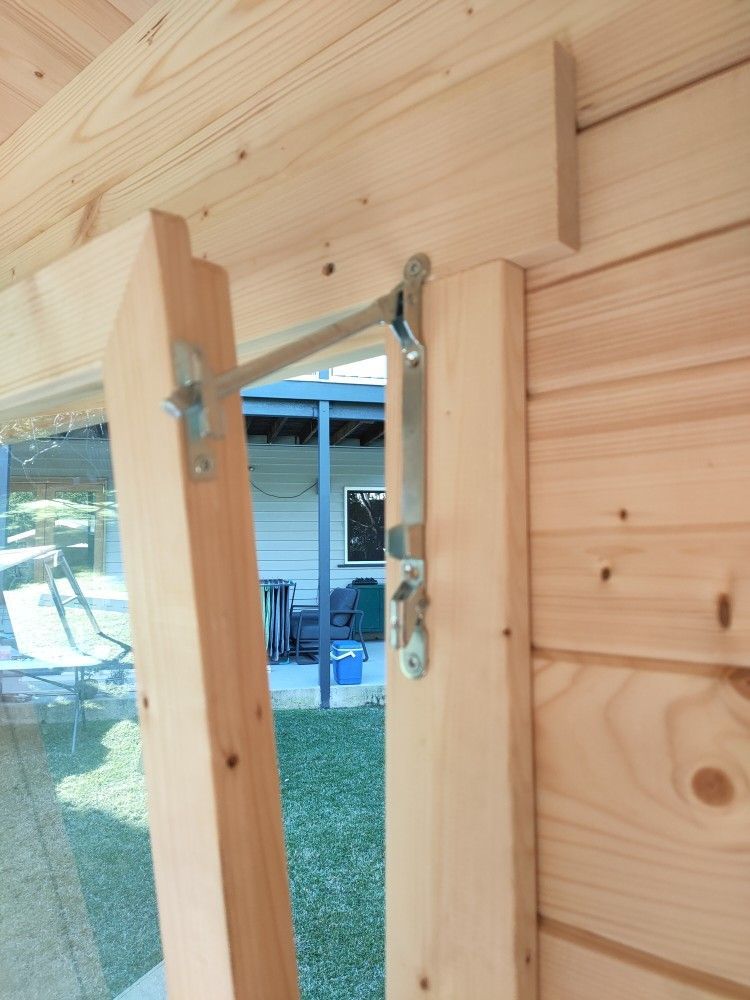
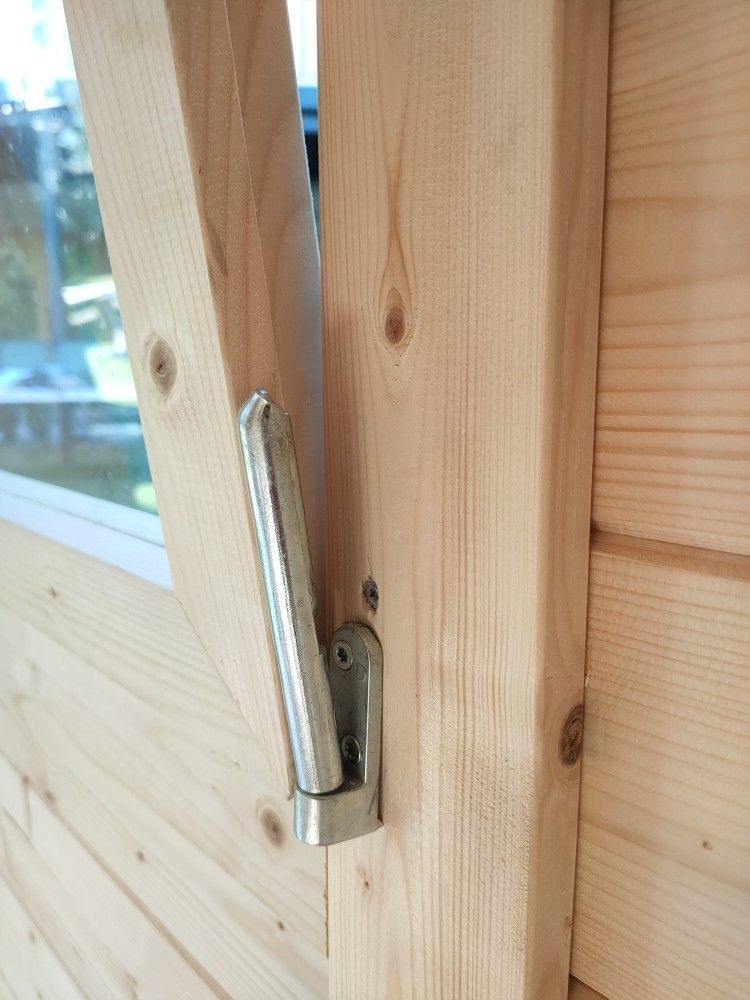
In all 28mm cabin models the main handle's only function is to open and close the window (first main image). The "Tilt'n'Turn" function is activated by closing a lever at the bottom of the window, and by push-open another lever at the top right fitting (two smaller images at the top right). The window can than be opened in the "tilt" position.
The last image shows the bottom right fitting in the "tilt" position. Additional windows are available.
LIKE IT? SHARE IT!